Patent Diagram – Electric Lamp by J. W. Nichols & L. H. Latimer
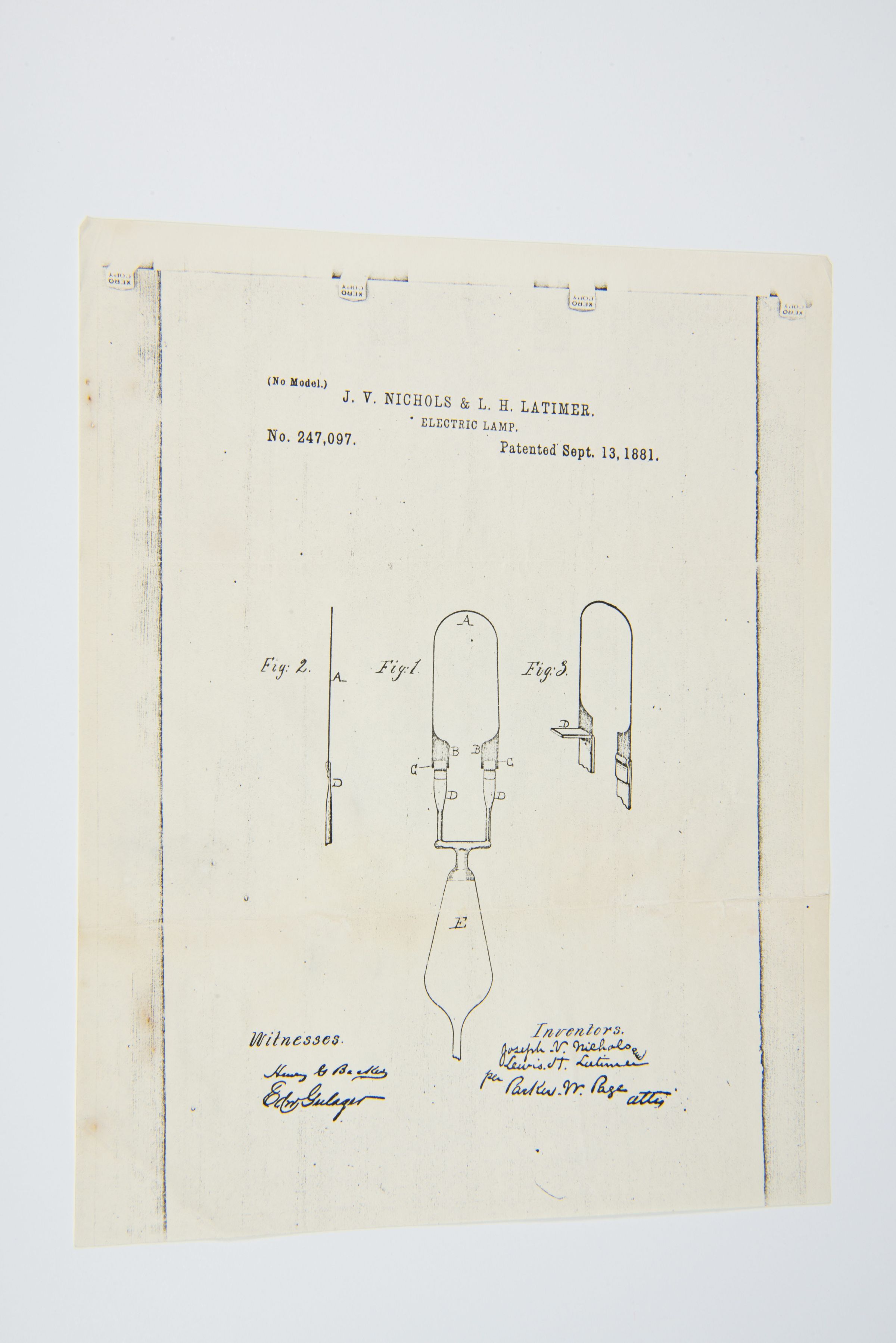
Significance of the Patent: Latimer’s 1881 patent with fellow Maxim employee Joseph V. Nichols proposed a new way of clamping carbon strips—the light source inside incandescent glass bulbs—to the wires that supplied electric power to them. This method would end the need for platinum “nuts, screws, or pins... whereby the cost of the lamps is greatly reduced.” This patent was issued during a period of rapid advancements in electric lighting technology. Lewis Howard Latimer was a key contributor to electric lighting innovations, particularly carbon filament technology, which significantly improved the durability and efficiency of electric lamps. This patent represents an important step in the refinement of incandescent bulbs, as inventors sought to create longer-lasting and more practical lighting solutions. J. W. Nichols & Lewis Latimer's Contributions: J. W. Nichols was another inventor working in the development of electric lamps, and this collaboration with Latimer highlights his involvement in multiple aspects of lighting technology. Latimer, an African American inventor, engineer, and patent draftsman, played a critical role in the expansion of electric lighting beyond Edison’s initial patents, helping companies like the U.S. Electric Lighting Company compete with Edison’s designs.
Latimer Family Papers (1870-1996 ) [QPL Full Collection]
Text at the Top: "J. W. NICHOLS & L. H. LATIMER" "Electric Lamp" "No. 247,097" "Patented Sept. 13, 1881." "(No Model.)" Handwritten Signatures: Inventors: J. W. Nichols & L. H. Latimer Witnesses: Names partially visible but should be reviewed for precise transcription. Publisher/Printer Mark (Bottom Edge): "N. PETERS, PHOTO-LITHOGRAPHER, WASHINGTON, D.C."