

26 Oct African Archives Need More Than Scanners: What UNESCO’s Projects Reveal
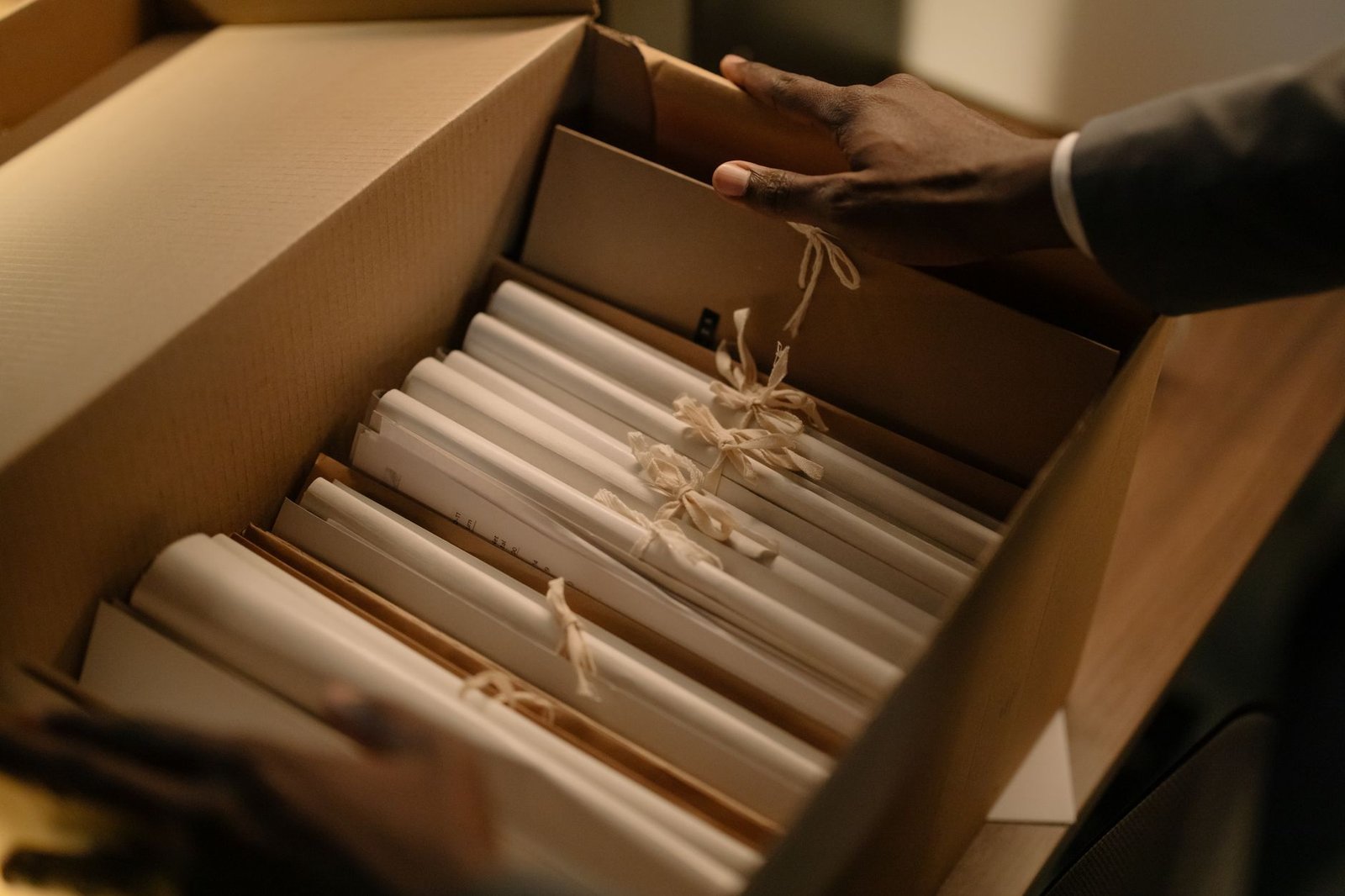
Photo: cottonbro studio on Pexels
A scanner can copy a tape. It can’t stop termites.
That sentence isn’t a figure of speech. In Malawi, an assessment of church manuscripts at the National Archives, papers dating from the 1880s to 1964, found termite damage. The response UNESCO reported wasn’t a scanning project. It was a disaster management plan, built with specialists from ICCROM, and a dedicated repository for long-term storage.
I read that and thought about line 94.
Line 94 of the brig Tribune manifest, National Archives microfilm M1895, Roll 7, is where Rachel Daggs appears: age 35, with six children. I can read her name today because someone kept the paper, described it, filmed it, put it in a building that stayed dry, and let the public ask to see it. Every one of those steps had to happen. If one failed, Rachel would be a family story with nothing underneath it.
So here is the question I keep asking: when we say an African archive needs digitizing, what else are we saying it needs?
What does the archive need before anyone scans it?
Somalia’s Radio Mogadishu Archive holds about 45,000 audio tapes, collected since 1951. According to UNESCO, over 85 percent are still playable. About 10 percent have badly deteriorated. More than 5 percent have been destroyed or critically damaged by fire and other disasters. That last number is the reason the project is titled around disaster preparedness, not only digitization.
The same report names a second problem. The archive has no comprehensive catalogue. A tape nobody can find is a tape nobody will ever hear, scanned or not.
Who does the work after the equipment arrives?
In June 2026, 25 experts from Somali memory institutions gathered in Mogadishu for a three-day Memory of the World workshop. The improved archive facilities were opened on the last day. Equipment was bought. People were trained. Both matter, and the second lasts longer.
Uganda shows the same lesson from another angle. At a 2023 UNESCO-backed seminar at Makerere University, speakers worked on a guide to preventive conservation and disaster prevention for documentary heritage in Africa. The list of threats they discussed reads like a home inspection: fire, water, pests, light, temperature, humidity, and equipment nobody can repair anymore. They also talked about teaching the next generation of cultural heritage professionals, because a plan needs someone to carry it out.
What a lasting archive project has
Here is the pattern I see across these projects. Three things, each one named:
- Care. The building, the shelves, the climate, the fire plan, the pest plan, the storage for the copies. This is physical, and no software fixes it.
- Description. Metadata. A name, a date, a place, a language, who spoke, who recorded. This is how a stranger finds the tape in 2056.
- People and access. Trained staff to do the work, and a way for the public to use what’s kept. An archive nobody can reach is only a very careful storage unit.
Why this matters to us
We are the descendants of people whose records were scattered, mislabeled, and sometimes never made. When an African archive loses its tapes to fire, it isn’t a technical loss. It’s the same erasure, repeated with better excuses.
Africa holds only 29 of the 570 entries on UNESCO’s international Memory of the World Register, about 5 percent. That number tells you how much documentary heritage is still waiting for care, description and trained hands.
When you read the next headline about a digitization grant, ask three things. Who is caring for the originals? Who is describing them? Who is allowed to use them?
Bring me your records question
Every Thursday at 7:00 PM Pacific I work through reader questions on camera at the Reference Desk. You can send one about what a record means, where records like it are kept, or why something is missing. You never have to appear on camera. About six questions get answered live each session. Send yours at the Reference Desk.
Sources
- UNESCO, Protecting Somalia’s documentary heritage
- UNESCO, Japan Funds-in-Trust, protecting documentary heritage at risk (Malawi)
- Makerere University News, UNESCO Documentary Heritage Seminar (2023)
- allAfrica, Somalia workshop (June 2026)
- National Archives microfilm M1895, Roll 7, brig Tribune manifest, line 94 (Aisha’s own research)