


15 Dec Sharing Your Family History in the Immersive Era
COMING JUNE 2026 !!!
Module 9 of the Tracing Our Roots, Reclaiming Our Legacy Course
Family history no longer has to live only in binders, books, or static family trees. As digital storytelling evolves, so do the ways we share, experience, and preserve ancestral narratives.
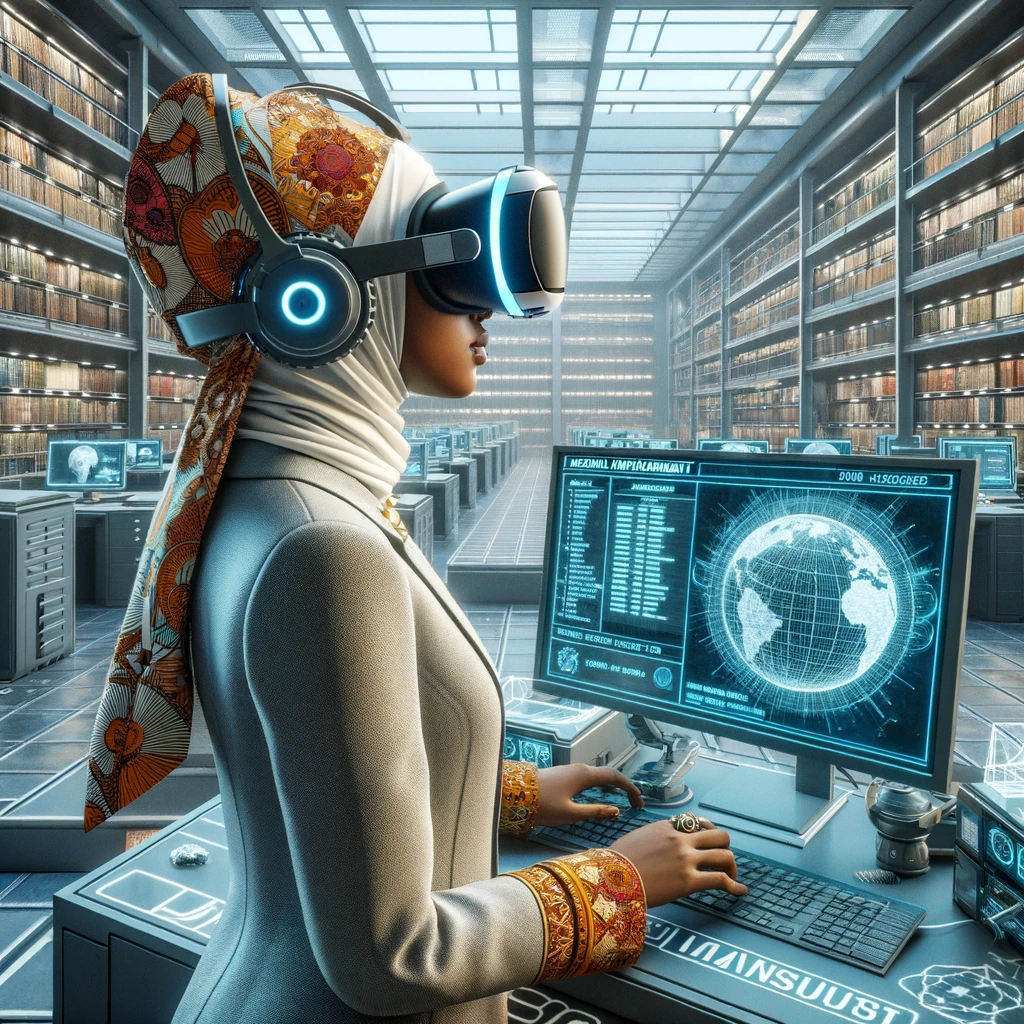
Sharing Your Family History in the Immersive Era is a focused, self-paced course that also serves as Module 9 of the full program, Tracing Our Roots, Reclaiming Our Legacy. This course introduces learners to contemporary and emerging formats for presenting genealogical research—including digital exhibits, multimedia storytelling, and immersive platforms—while maintaining care, accuracy, and cultural responsibility.
This module is designed for those who want to move beyond traditional formats and explore new ways of sharing family history that expand access, deepen engagement, and honor ancestral narratives.
About the Course
Led by Archivist and Genealogist Aisha La’Don Abdul Rahman, MLIS, this focused course—also offered as Module 9 of Tracing Our Roots, Reclaiming Our Legacy—equips you with:
- An understanding of immersive and digital storytelling for family history
- Practical approaches to designing digital and spatial exhibits
- Strategies for presenting genealogical research through multimedia formats
- Insight into virtual heritage platforms and online exhibition spaces
- Ethical frameworks for sharing ancestral narratives in digital environments
This is genealogy as living memory—expanded through technology while grounded in care, context, and responsibility.
Who This Course Is For
This module is ideal for:
- Family historians interested in sharing research beyond traditional formats
- Genealogists exploring digital exhibits or online storytelling
- Creators working at the intersection of heritage, memory, and technology
- Educators, archivists, or community historians seeking new engagement tools
- Individuals who want to honor their ancestors while reaching broader audiences
No prior experience with immersive platforms is required.
What You Will Learn
By the end of this module, you will be able to:
- Explore contemporary methods for sharing family history digitally
- Understand the possibilities of immersive and multimedia storytelling
- Design simple digital or spatial exhibits for family or community use
- Select storytelling formats aligned with your goals and audience
- Apply ethical principles when presenting ancestral narratives online
Why Take This Module
As technology reshapes how stories are told, family history has the opportunity to become more accessible, engaging, and alive.
This module helps you:
- Move beyond static records and written narratives
- Share family history in ways that invite connection and exploration
- Expand access to genealogical research across generations and locations
- Honor ancestral stories while adapting to modern platforms
Immersive storytelling is not about novelty—it is about creating meaningful access to memory.
Course Structure
- Self-paced online learning
- One foundational lesson with guided topics
- Pre-recorded video instruction
- Conceptual frameworks and practical examples
- Lifetime access to course materials
You may revisit this module as technologies evolve and your storytelling goals expand.
About the Instructor
Aisha La’Don Abdul Rahman, MLIS is an archivist, genealogist, and digital preservation specialist with over two decades of experience working in cultural heritage, archives, and legacy preservation. Her work centers African American memory, ethical storytelling, and sustainable approaches to preserving family and community histories.
This course includes a digital workbook containing the worksheets, checklists, and guided exercises from the Tracing Our Roots book by Aisha La’Don Abdul Rahman.

The workbook is designed to support hands-on learning and practical application of the concepts taught in this module. All materials are provided within the course and can be completed digitally or printed for personal use.
While the workbook is based on the book, learners do not need to purchase additional materials to complete this module. The worksheets included here are intended to help you document your research, reflect on discoveries, and move through the learning process with clarity and intention.