



13 Dec From Publication to the Next Chapter: Continuing the Work of Immersive Heritage & Access
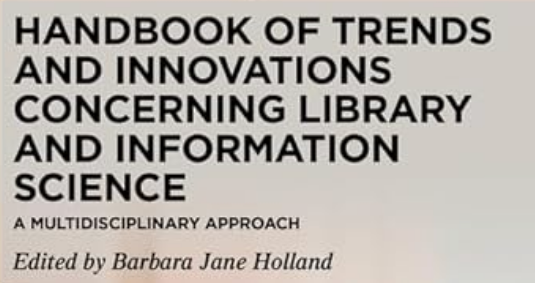
I’m pleased to share that the edited volume Handbook of Trends and Innovations Concerning Library & Information Science has now been published and is available through major booksellers, including Amazon, Barnes & Noble, and other academic and commercial outlets.
This volume brings together scholars and practitioners examining emerging directions in libraries and information science, and I was honored to contribute a chapter titled “Leveraging Browser-Based VR for GLAM Institutions.” The chapter explores how browser-based virtual reality platforms can expand access, engagement, and participation in galleries, libraries, archives, and museums—particularly for communities historically underrepresented in cultural heritage spaces.
Contributing to this publication was a meaningful opportunity to formalize years of applied work in immersive heritage, digital preservation, and community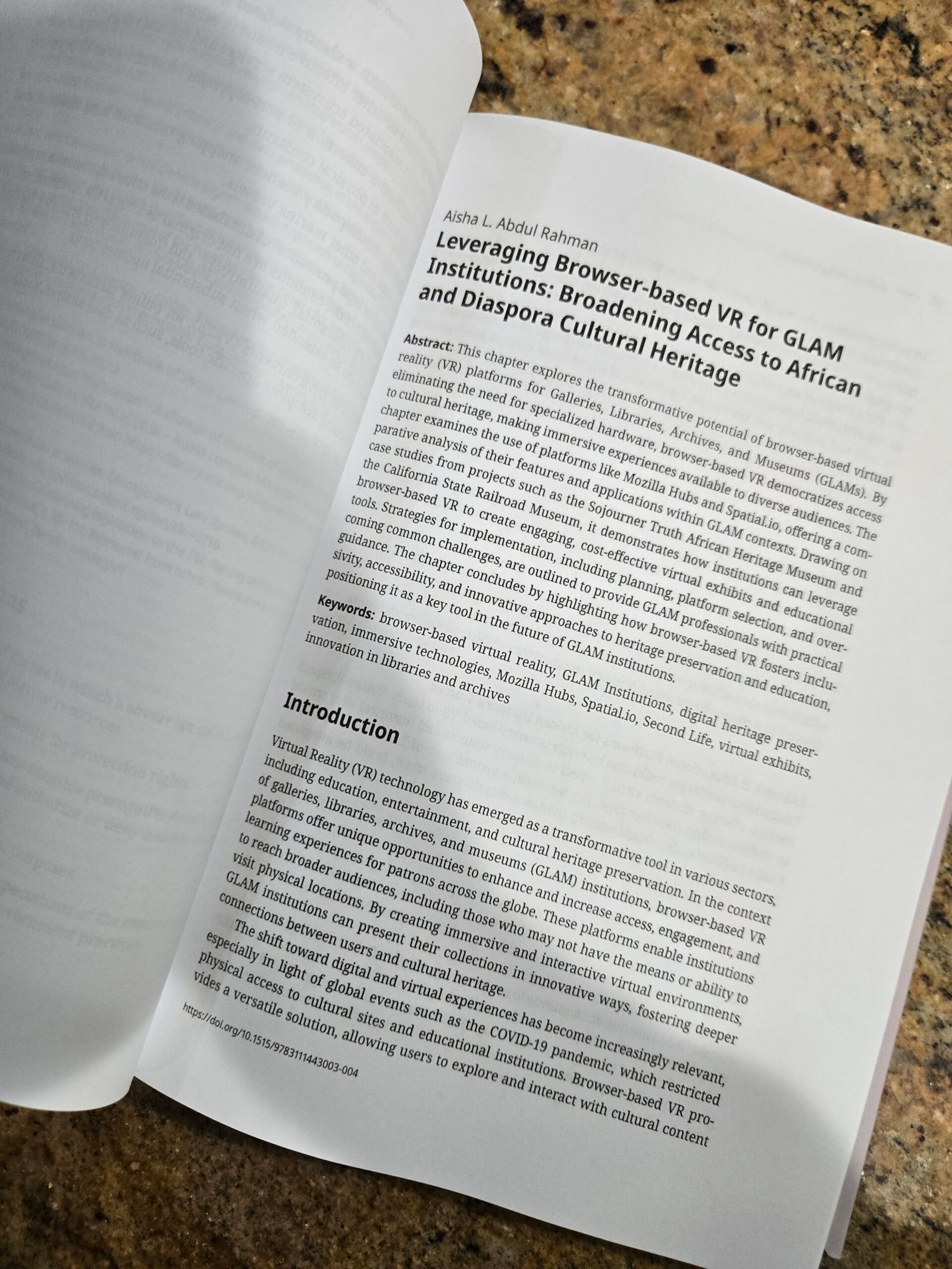 -centered access. It also affirmed the growing recognition of browser-based VR as a viable, scalable, and equitable tool for knowledge environments—not simply an experimental technology, but one already reshaping how people encounter archival records and primary sources.
Looking ahead, I’m excited to continue this line of inquiry through an upcoming chapter contribution focused on immersive metaverse libraries as accessible and equitable smart knowledge environments. This next chapter builds directly on my earlier work, expanding the conversation to examine how browser-based VR, AR, and AI-supported systems can support inclusivity across ethnicity, nationality, demographics, learning styles, and physical or cognitive differences.
My ongoing research and practice remain centered on a key question:
How can emerging technologies be designed and implemented in ways that genuinely expand access to archival records, primary sources, and cultural memory—rather than reproducing existing barriers?
Browser-based immersive technologies are playing an increasingly important role in this future. By reducing hardware requirements and supporting multimodal interaction, these platforms make it possible for libraries and cultural institutions to reach broader, more diverse audiences—locally and globally. They also open new possibilities for engaging with records spatially, contextually, and narratively, allowing users to encounter history in ways that are more embodied, relational, and meaningful.
As I continue this work, I remain committed to researching, documenting, and sharing practical findings on how immersive technologies are transforming access to archives and cultural heritage. This moment represents not an endpoint, but a continuation—one chapter informing the next, as libraries and archives evolve alongside the technologies shaping our collective future.